About us
An association built to work in Europe
Eudaimonia is an Italian non-profit association, founded on 18 August 2026 in Montesilvano: non-partisan, non-denominational, independent.
How it started
On 18 August 2026, in Montesilvano, three people founded Associazione Eudaimonia. They shared a simple observation: in Italy's mid-sized provinces and inner areas, access to European opportunities still depends far too much on chance: on a well-informed teacher, a friend who already left, a call spotted by luck.
The association exists to make that access systematic. Not by adding another information desk, but by designing and delivering the experiences directly: exchanges, training, volunteering, workshops. And doing it from Abruzzo, not from a capital city.
We are at the very beginning of our path, and on this website you will find no participant figures and no completed projects, because we have none yet. What you will find, precisely stated, is what we want to do, how we intend to do it and in what order.
The people
The Governing Board serving until 2028. Three people, and what each of them brings.
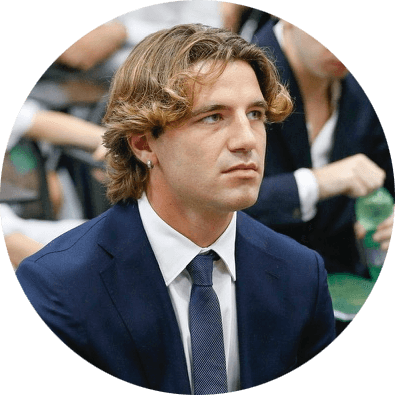
Daniele Mariani
President and legal representative
Double degree in Artificial Intelligence, Data Science and Philosophy of AI at Sapienza and LUMSA; currently reading for an MSc in Human-Centered Artificial Intelligence & Law across the Universities of Milan, Milan-Bicocca and Pavia. Worked on explainable AI and AI Act and GDPR compliance at Deloitte and at an AI startup in Madrid. His subject is responsible AI: how systems decide, where they fail, and who answers for them.
- FB
Federico Beraldo
Vice-President and Secretary
Replaces the President when absent or unavailable; maintains the corporate books and the minutes of meetings.
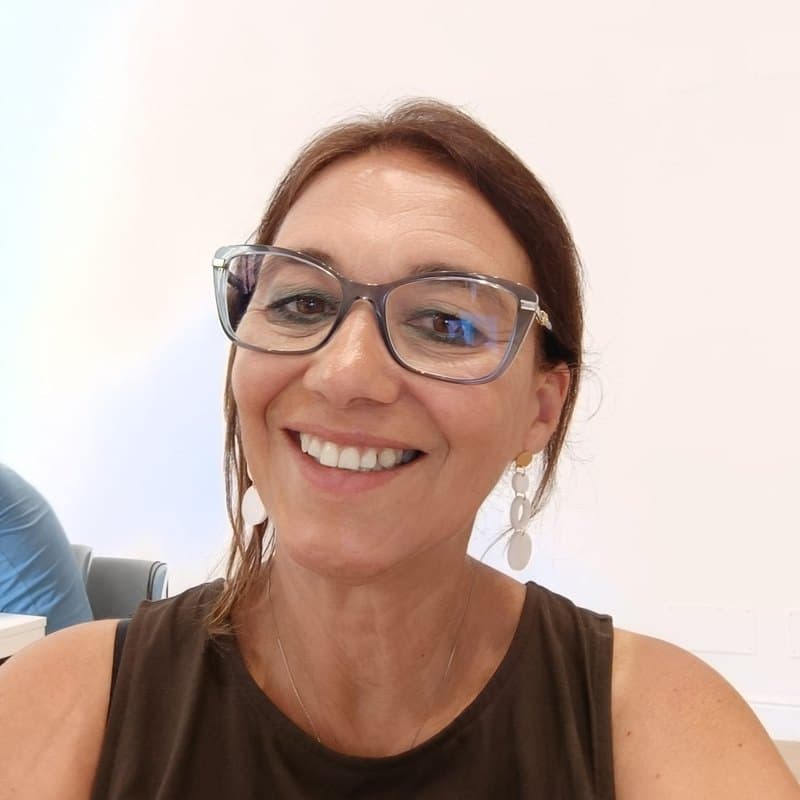
Lorenza Piarulli
Treasurer
Law degree and a postgraduate master's in the economics of cooperation. A vocational training specialist, with the functions of direction, service delivery, coordination and financial reporting within the EQUAL Community Initiative, Actions 1, 2 and 3, on the labour-market inclusion of disadvantaged people, and coordination of the transnational activities with France, Portugal, Greece and Lithuania. She brings the association the part of European projects that frightens everyone else: design, management and financial reporting.
Nobody receives any remuneration: every office is unpaid.
What we are, concretely
Four choices made once and for all, not slogans.
Non-profit
No profit is distributed, in any form. Everything that comes in goes back into the activities.
Non-partisan and non-denominational
We are not the arm of a political party or a religious denomination, and we do not pursue their interests.
Independent
Nobody sets our direction from the outside: the members do.
Unpaid office
Nobody holding office is paid a cent. Only documented expenses are reimbursed.
εὐδαιμονία
Why Eudaimonia
The Greek εὐδαιμονία is conveniently translated as “happiness”, but literally it says something else: εὖ, well, and δαίμων, the daimon each of us carries. One's own daimon, come off well. For Aristotle it is not a state of mind but an activity, and an activity needs conditions: time, tools, encounters, someone who opens a door. Twenty-two centuries later Nietzsche picks up a line of Pindar and turns it into an imperative: become what you are. That is not an invitation to stay put, it is a whole life's work, and nobody finishes it alone. An association working with young people can do little about happiness and a great deal about the conditions that make that work possible. We chose the name that is hardest to translate and easiest to verify.